Patrick's Story
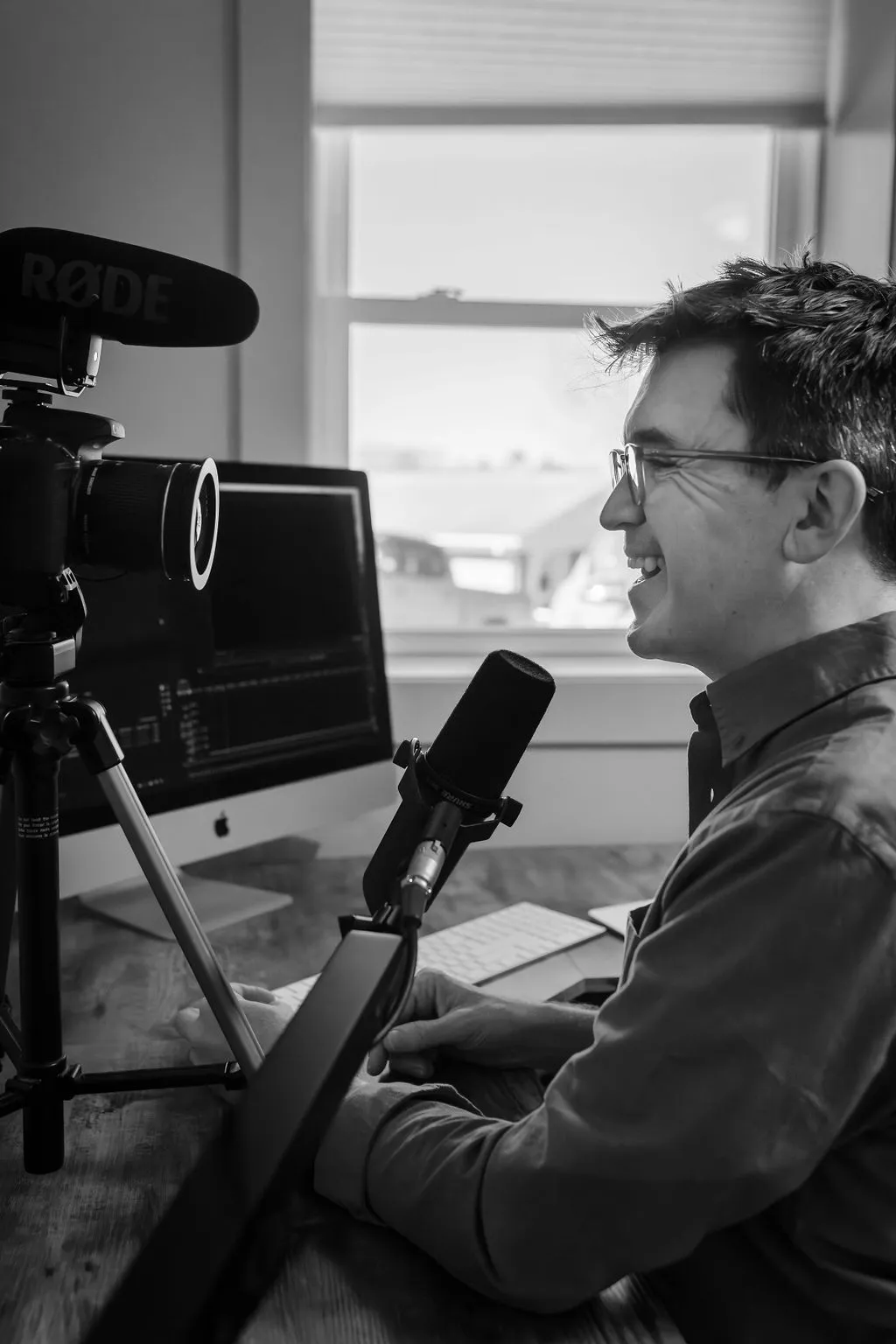
Patrick Teahan grew up in a family system that wasn't safe. His childhood was rooted in chaos, domestic violence, and substance abuse — the kind of environment that leaves marks you can't always see, but that shape everything: how you relate, how you cope, how you see yourself.
At twenty, Patrick realized he was dissociated. He struggled with negative coping and couldn't manage intimacy. He was lucky enough to find a good childhood trauma therapist — and shortly after starting individual therapy, he joined a Relationship Recovery Process (RRP) group. That experience changed the trajectory of his life.
It didn't just help him heal. It made him want to help others do the same.
From Survivor to Clinician
Patrick earned a dual Bachelor's degree in Music and Psychology from the University of Massachusetts Boston, followed by a Master's in Social Work (MSW) from Boston College. He became a licensed therapist and spent three years working with veterans at a VA hospital in inpatient psychiatry.
But the work that had changed his own life — RRP group therapy for childhood trauma — kept pulling him forward. In 2012, Patrick opened a private practice where he ran long-term RRP groups and developed a six-month beginner's modality designed to help clients begin working through their family-of-origin trauma.
He ran that practice for over a decade before pausing it in 2024 to focus full-time on education and research.
The Relationship Recovery Process
The model that changed Patrick's life — and that has become central to his life's work — is the Relationship Recovery Process (RRP), a group psychotherapy model created by Amanda Curtin, LICSW. RRP is specifically designed for adults recovering from childhood trauma, focusing on the relational patterns, family dynamics, and disruptions to identity that traditional talk therapy often doesn't reach.
Where most trauma treatments target symptoms, RRP works at the level of the family system itself — helping clients understand and ultimately transform the ways their upbringing shaped how they relate to others and to themselves. It's done in a group setting because the damage happened in relationships, and it heals in relationships.
Amanda Curtin developed the model over decades of clinical work with childhood trauma survivors, and Patrick has been both a client and a practitioner of RRP for most of his adult life. Their ongoing collaboration spans clinical practice, education, and the research now underway to establish RRP as an empirically validated treatment model.
Learn more about RRP →
Taking the Work Public
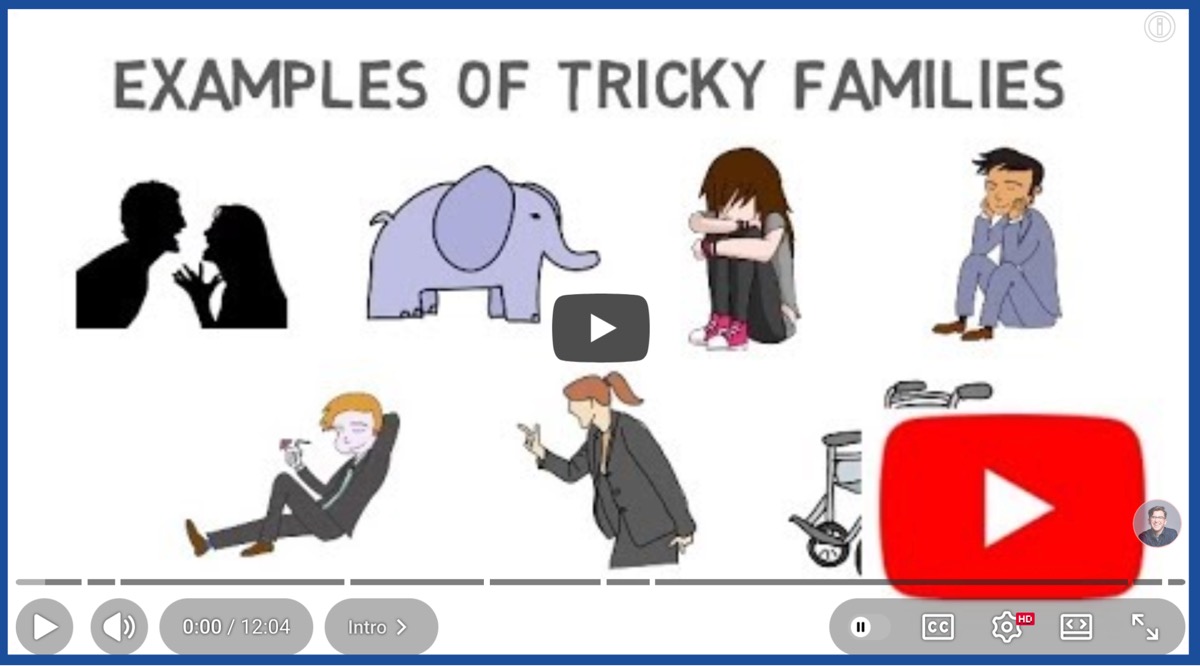
In January 2018, Patrick created a YouTube video expanding on the ACE Study test through the lens of Amanda Curtin, LICSW's RRP theory — specifically, the distinction between blatant abuse and tricky abuse. It was meant to be a simple educational resource for his private practice website.
By December 2018, the video had gone viral.
What followed was something Patrick hadn't planned for. His content was being translated into other languages. It was being used in undergraduate and graduate psychology courses. Hundreds of thousands of people were finding his channel and, for the first time, seeing their own experiences reflected back to them.
Today, Patrick's YouTube channel has over 800,000 subscribers and more than 80 million views. His work has been featured in national media, and his perspective on the lasting effects of childhood trauma has resonated with people around the world. But the numbers aren't the point. The point is that the content reaches people who grew up in families that looked fine on the outside but felt unsafe on the inside — and it gives them language for what happened.
You can explore Patrick's full library of videos and posts in the Content Archive.
Pioneering Research in Childhood Trauma
Patrick's work has evolved well beyond education. Over the past several years, he has become a leading voice in advancing how childhood trauma is measured, diagnosed, and treated — through original research and the development of new clinical tools.
Improving How We Measure Trauma
A question kept surfacing — from Patrick's community, from clinicians, from survivors themselves: Why do so many adults with histories of childhood trauma fail to see their experiences represented within traditional PTSD frameworks?
Standard screening tools weren't capturing the full picture. The chronic shame, the emotional volatility, the relational instability, the family systems that looked stable on the surface but felt unsafe internally — none of that fit neatly into existing diagnostic categories.
Patrick set out to change that. He has since created two peer-reviewed clinical assessments designed to help survivors and clinicians measure the true impact of childhood trauma:
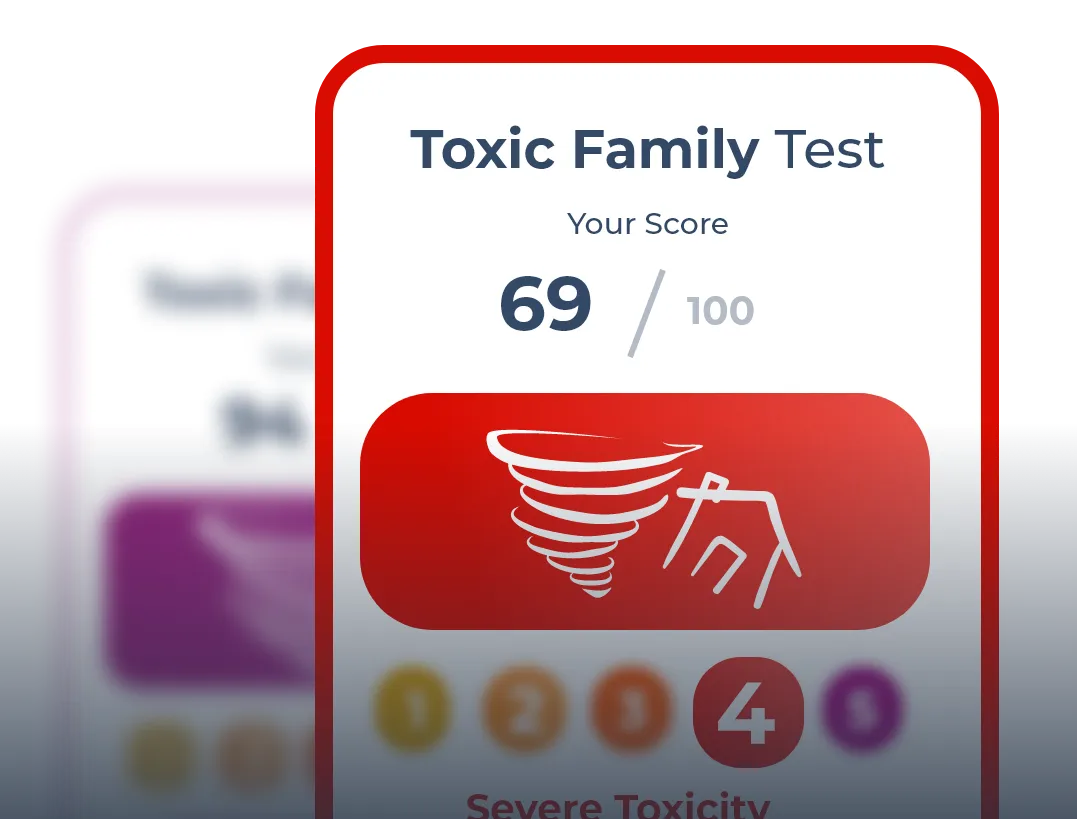
The Family Toxicity Scale — a tool for measuring toxicity in a child's environment. Published in June 2025 in the Journal of Family Trauma, Child Custody & Child Development. Read the published paper →
Take the Free Toxic Family Test
The CPTSD-DSO Scale — a 38-item assessment measuring Disturbance in Self-Organization (DSO), a core component of Complex PTSD that includes negative self-concept, emotional dysregulation, and attachment disruption. Co-authored with Dr. Stephen Foster and published in 2025 in the Journal of Affective Disorders, the scale found that individuals with CPTSD scored significantly higher than those with general PTSD, demonstrating strong validity. Read the published paper →
These tools address a real gap in the field: they measure the internal disruptions — the damage to identity, regulation, and relationships — that keep Complex PTSD persistent even after traditional trauma interventions.
Advancing the Relationship Recovery Process
Since 2022, Patrick has led empirical research on the RRP group model itself, measuring changes in trauma symptoms for participants enrolled in six-month RRP groups. Participants complete assessments before, during, and after treatment, allowing the team to track change over time.
Initial (unpublished) findings show that participants experience significant decreases in active PTSD symptoms, as measured by the PCL-5, in just six months. The initial research project is projected for publication in the summer of 2026, and the study will continue as a longitudinal project tracking outcomes across long-term RRP work and individual therapy.
The long-term goal is to establish RRP as an empirically validated and broadly recognized treatment model for childhood trauma recovery. Learn more about the Relationship Recovery Process →
The Research Team
This work is conducted in collaboration with an interdisciplinary team that brings together clinical practice, research design, statistical analysis, and trauma-informed approaches:
Patrick Teahan, MSW — Lead researcher, educator, and RRP practitioner
Kyle Jennette, PhD — Research design and methodology
Dr. Christopher Frechette, LICSW — Clinical practice and trauma-informed approaches
Dr. Stephen Foster, PhD — Statistical analysis and co-author of the CPTSD-DSO scale
What Patrick Does Today
Creating free childhood trauma recovery content. Patrick continues to produce psychoeducational content — videos, posts, and deep dives — that reaches hundreds of thousands of people each month. Browse the full Content Archive.
Publishing the Recovery newsletter. A free resource packed with the best content, tools, and a full explainer of the RRP model. Subscribe to Recovery →
Courses and structured learning. Patrick's online courses and offerings cover a broad range of topics, from understanding the roots of childhood trauma to building resilience and reclaiming your sense of self.
Running an online membership for survivors. The Healing Community membership connects survivors with tools, resources, and therapists trained in childhood trauma recovery.
Writing a book. Patrick is currently writing a book about his personal journey and a first-person in-depth review of healing through RRP.
Connect
Explore Offerings →
Join the Healing Community →
Browse the Content Archive →
Subscribe to the Recovery Newsletter →
Get in Touch →