The Relationship Recovery Process (RRP)
Connecting and developing a relationship with your inner child and those around you.
What Is RRP?
The Relationship Recovery Process (RRP) is a model for understanding and treating childhood trauma — specifically, the kind of trauma that originates in dysfunctional or abusive family systems. Developed by Amanda Curtin, LICSW, beginning in the early 1990s, RRP has become the foundational framework behind Patrick Teahan's education, community, and research.
If you've ever wondered why you repeat certain patterns in relationships, why you shut down or overreact in situations that seem small, or why you can't shake the feeling that something about the way you move through the world is stuck — RRP offers a framework for making sense of that. And more importantly, a path through it.
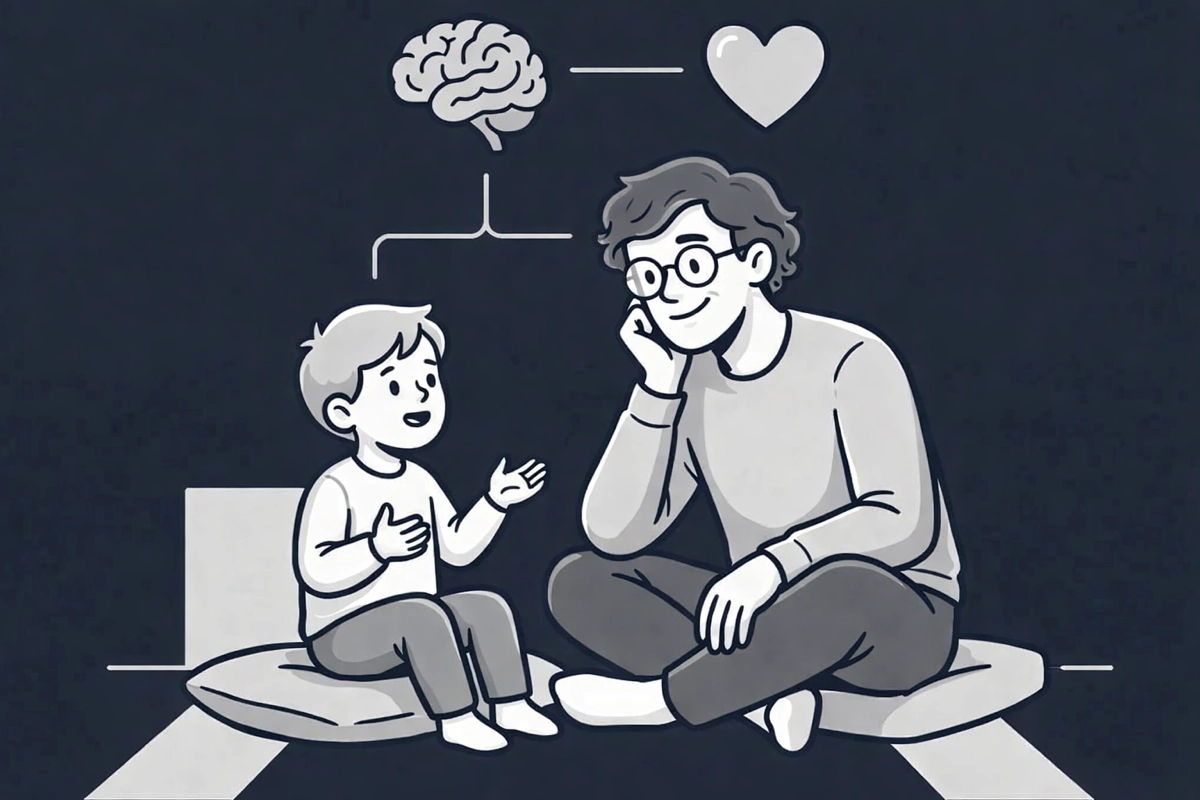
At its core, RRP is built on a simple but powerful idea: when we grow up in families that aren't safe, two parts of ourselves become disconnected — the adult self, who navigates the present and seeks to grow, and the inner child, who holds the emotions, memories, and survival responses from our earliest years.
That inner child doesn't disappear when we grow up. It continues to influence how we relate, how we react, and how we cope — often in ways we don't recognize or can't control. RRP is the process of reconnecting those two parts, so the adult can lead and the child can finally be heard, understood, and cared for.
Origins
RRP was created by Amanda Curtin, LICSW, a trauma specialist and group therapist based in Cambridge, Massachusetts. In her clinical work, Curtin observed a consistent pattern: adults struggling with substance use, relational dysfunction, and emotional dysregulation frequently shared a common root — childhood abuse and dysfunction within their family system of origin.
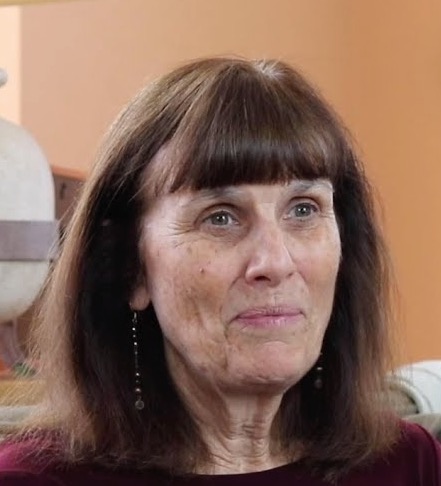
Amanda Curtin
LICSW, is a trauma specialist and group therapist based in Cambridge, MA. Beginning in the early 1990s, she created the Relationship Recovery Process — a model rooted in inner child work that helps survivors reconnect their adult self with their inner child to heal the wounds of dysfunctional family systems.
Drawing on Gestalt therapy principles — particularly the concepts of unfinished business and original pain work — as well as psychodrama and the foundational trauma research of Judith Herman, Curtin built a model that addresses what many existing approaches didn't: the specific, lasting damage done by the family you grew up in, and the relational repair needed to undo it.
Patrick experienced RRP first as a client, beginning as a young man in his own recovery from childhood trauma. That experience became the foundation for his clinical practice, his educational work, and the research he now leads to bring broader recognition to the model. Patrick and Amanda have collaborated for years across clinical practice, education, and research — and RRP remains the central framework behind everything Patrick does.
The Two Goals of RRP
Everything in the RRP framework flows from two interconnected goals:
1. Finish Business with Your Family of Origin
"Finishing business" means confronting and processing what actually happened in your family — and putting the responsibility where it belongs.
Many childhood trauma survivors carry beliefs about themselves that were placed there by their family system. A child who was scapegoated grows into an adult who believes "I'm the problem." A child who was parentified grows into an adult who believes their value depends on what they do for others. A child who was ignored grows into an adult who believes they don't matter.
These aren't personality traits. They're programs that were installed by a dysfunctional system — and RRP is the process of uninstalling them.
This means holding caregivers accountable for the dynamics they created, undoing internalized shame, reassigning responsibility that was never yours to carry, and integrating the emotional pain that's been stored in the body and the nervous system since childhood.
2. Reclaim Intimacy
The second goal is about what comes after. Once you begin finishing business with the past, you can start building the capacity for real connection — with yourself, with a partner, and with others.
Childhood trauma doesn't just leave emotional scars. It distorts the template for how relationships work. It teaches you that love is conditional, that conflict is dangerous, that vulnerability will be used against you. RRP helps clients recognize those distortions and, through practice, replace them with something healthier.
This is where the relational element of the work becomes essential. Whether it's in a therapeutic group, in a course exercise, or in the daily practice of re-parenting your inner child, intimacy is reclaimed by doing it differently — not just understanding it differently.
How Childhood Trauma Shows Up in Adult Life
One of the most common experiences people describe when they first encounter Patrick's content is recognition: That's me. I didn't know there was a name for this.
RRP provides the language. Here's what unresolved childhood trauma often looks like in adulthood:
Reactions that don't match the moment. Receiving feedback from a boss triggers a shame spiral. A partner's offhand comment sends you into shutdown. A minor conflict feels like a threat to your survival. These responses — fight, flight, freeze, fawn — made sense in the family system you grew up in. They don't serve you anymore, but the inner child doesn't know that yet.
Coping strategies that numb rather than heal. Food, alcohol, technology, overwork, spending, avoidance — these aren't moral failures. They're the strategies your nervous system developed to manage emotions that no one helped you process as a child.
Patterns you can't seem to break. Dating unavailable people. Avoiding self-care. Starting projects and never finishing them. Codependency. Financial self-sabotage. Difficulty letting things go. These aren't character flaws — they're echoes of what was modeled (or not modeled) in the first eighteen years of your life.
A disconnect between knowing and feeling. You might intellectually understand your childhood wasn't healthy, but still struggle to feel anger toward a parent, still default to self-blame, still believe on some level that you're the one who's broken. That gap between knowing and feeling is exactly where RRP works.
The RRP Toolbox
RRP draws on several interconnected practices. Some of these are used primarily in clinical group settings, while others — particularly inner child re-parenting and dialoguing — are principles that Patrick has made widely accessible through his courses, content, and the Healing Community.
Inner child re-parenting. The central practice of RRP. The client learns to become the nurturing, supportive parent their inner child never had — validating the child's experience, soothing activated responses, and gradually building a new internal relationship where the adult leads and the child feels safe.
Dialoguing. A written conversation between the adult self and the inner child, done by switching a pen between the dominant hand (representing the adult) and the non-dominant hand (representing the child). This bilateral process bridges the emotional and thinking systems — helping reduce triggered responses and increase regulation over time. It's deeper than self-talk. It shifts the upset into its right place while giving the adult more insight and control over the present situation.

Psychoeducation. Understanding trauma's impact on the brain, the nervous system, and relationships. This is where Patrick's educational content connects most directly to RRP — his videos, posts, and courses are built on the psychoeducational foundation of the model.
Experiential processing. Role plays, psychodrama, and exercises that move beyond cognitive understanding into embodied experience. Trauma lives in the body and the nervous system, and RRP uses bottom-up processing to access and integrate what talk alone can't reach.
Relational tools. Structured exercises for working through triggers and distortions in relationships — including the "123" intimacy tool, which helps clients (or couples) identify where a childhood trigger is distorting a present-day interaction and work through it together.
How RRP Differs from Other Approaches
If you've explored other trauma therapies, you may be wondering where RRP fits.
RRP is the only trauma modality focused exclusively on the family system of origin. While approaches like EMDR, CPT, and Prolonged Exposure are effective short-term treatments for PTSD symptoms (typically six to twelve weeks), RRP is a longer-term model — generally six months to three years — because the relational damage done by a dysfunctional family system takes time and sustained relational work to repair.
RRP shares the bottom-up, experiential processing quality of EMDR but differs in its group orientation and its focus on relational dynamics among peers rather than one-to-one processing with a therapist. It differs from the top-down cognitive approaches of CPT and PE through its emphasis on embodied, experiential intervention.
And while RRP involves parts work — specifically the inner adult and inner child — it should not be confused with Internal Family Systems (IFS), which engages with multiple internal parts. RRP focuses specifically on the relationship between the adult self and the inner child, with variations for the child's age or developmental stage.
Research and the Future of RRP
Patrick is actively working to bring formal, empirical recognition to RRP as an evidence-based treatment model. Since 2022, his team of research collaborators have been conducting studies measuring changes in trauma symptoms for participants in six-month RRP groups, with findings projected for publication in the summer of 2026. A longitudinal study tracking long-term outcomes is ongoing.
In addition to studying RRP's effectiveness, Patrick has developed new clinical assessment tools — the Family Toxicity Scale and the CPTSD-DSO Scale — designed to better capture the specific ways childhood trauma disrupts identity, emotional regulation, and attachment. These tools address gaps in existing diagnostic frameworks and are published in peer-reviewed, scientific journals.
Learn more about Patrick's work →Who Is RRP For?
If you're someone who just found Patrick's content and you're trying to understand the approach behind it — this is it. RRP is the lens through which Patrick understands childhood trauma, and the framework behind his videos, courses, and community. You don't need to join a therapy group to benefit from these ideas. Start with the Content Archive or the Recovery newsletter.
If you're a survivor looking for deeper, structured healing — RRP group therapy may be the right next step. Trained RRP therapists facilitate both introductory and long-term groups for adults who experienced family-of-origin trauma.
Find an RRP-trained therapist →If you're a therapist or clinician interested in learning the RRP model and integrating it into your practice, Patrick periodically offers training programs for mental health professionals.
Sign up to be notified of upcoming RRP trainings →RRP in Patrick's Work
RRP is a clinical group therapy model — and for those seeking that level of treatment, trained RRP therapists offer both short-term (approximately six months) and long-term (approximately three years) group programs. But the principles of RRP extend well beyond the therapy room. Patrick has spent years translating the core ideas of the model — inner child re-parenting, finishing business, psychoeducation on family systems, relational repair — into resources that are accessible to anyone, wherever they are in their healing journey.
Patrick's content — the videos, posts, and educational material that reach hundreds of thousands of people — is grounded in RRP psychoeducation. When Patrick explains why you react disproportionately to a boss's feedback, or why you keep choosing unavailable partners, or why you feel like you're "too much" and "not enough" at the same time, he's teaching RRP principles.
Patrick's courses and offerings provide structured, self-paced learning built on the RRP framework — from understanding the roots of childhood trauma to practicing inner child work and building new relational skills.
The Healing Community is where this comes together most directly. The membership creates a space for survivors to practice the principles of RRP — connecting with tools, engaging in inner child re-parenting work, and doing so within a community of people on the same path. It's not group therapy, but it's informed by the same understanding: that healing happens in connection with others.
The Recovery newsletter offers a free entry point — curated resources, content, and a full explainer of the RRP model delivered to your inbox.